Halloween Candy: Which Treats Are Easier on Your Child’s Teeth?
Halloween is one of the most exciting times of the year for children—and one of the times parents may start thinking about sugar, cavities and dental health.
But protecting your child’s teeth doesn’t necessarily mean taking all the fun out of Halloween.
Not all candy is the same
Some Halloween treats are harder on teeth than others.
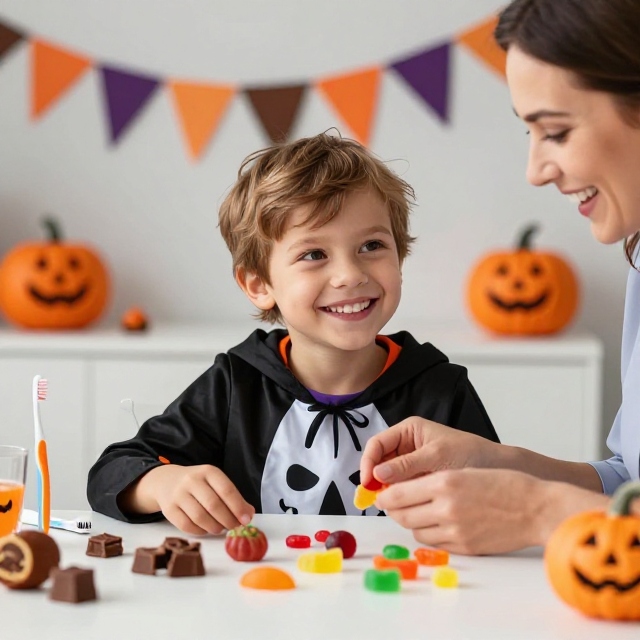
The American Dental Association specifically recommends being cautious with sticky or gummy candies because they can cling to teeth for longer periods. Sour candies are another concern because their acids can attack tooth enamel.
Chocolate can be a somewhat easier option because it generally doesn’t stick to teeth as readily.
Frequency matters too
It’s not just the total amount of candy that matters.
Repeatedly eating sugary treats throughout the day means teeth are exposed to sugar again and again. Instead of letting children snack continuously from their Halloween stash, families can establish reasonable treat times.
The ADA also notes that sugar-free gum with the ADA Seal of Acceptance can help stimulate saliva after eating.
Make Halloween about more than candy
Parents can also mix in non-candy treats such as stickers, coloring materials or small toys.
The goal isn’t to make Halloween feel restrictive. It’s to help children enjoy the holiday while building habits that protect their teeth.
When should your child’s teeth be checked?
Halloween can also be a good seasonal reminder to make sure children are up to date with their dental care.
If your child has tooth sensitivity, pain, visible changes or hasn’t had a recent dental examination, a professional evaluation can help identify whether anything needs attention.
Brilliant Dental Care in Bellevue provides dental care for families throughout the Eastside.
Enjoy the costumes, the trick-or-treating and a few treats—but keep your child’s smile in mind too.
Contact Brilliant Dental Care if your family has questions about your child’s dental health.