One Tooth Has Changed Color: Is It Just a Stain?
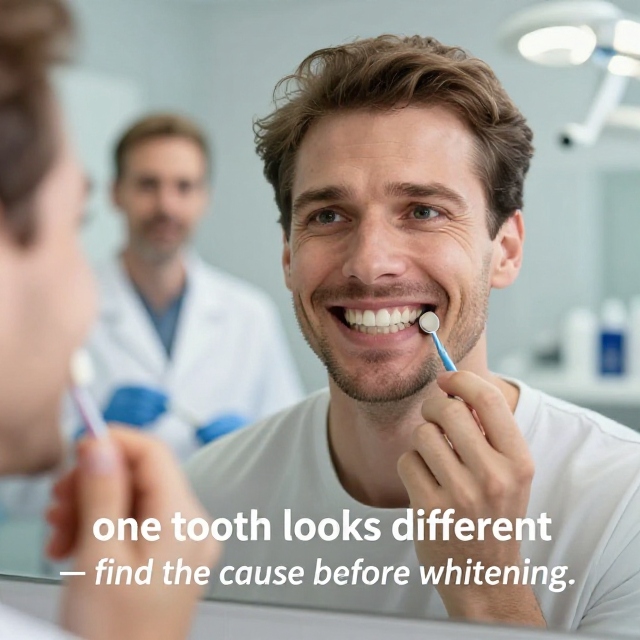
You’ve noticed something different when you look in the mirror.
Most of your teeth look the same—but one tooth appears darker, gray or noticeably different.
Your first thought might be:
“I just need to whiten it.”
But whitening isn’t always the answer.
Why can one tooth change color?
Tooth discoloration can have several causes.
The American Dental Association identifies factors including foods and drinks, aging, tobacco use, certain medications and trauma.
A tooth that has experienced an injury can become darker as the tooth responds to the trauma. This type of discoloration may not respond to conventional whitening.
Why should you find the cause first?
Whitening is designed to address certain types of staining. It isn’t equally effective for every type of discoloration, and it won’t whiten restorations such as crowns, veneers or fillings.
If only one tooth has changed significantly, understanding the reason for the change is an important first step.
That doesn’t mean the change is necessarily serious.
It means you shouldn’t automatically assume it’s simply a surface stain.
What can a dentist do?
A dental examination can help your dentist evaluate the tooth, review your history and determine whether the discoloration appears consistent with surface staining, trauma or another cause.
Once the cause is understood, you can discuss whether cosmetic treatment is appropriate or whether the tooth needs further attention.
At Brilliant Dental Care in Bellevue, patients can discuss both dental health and cosmetic concerns with their dental team.
So before reaching for another whitening product, ask a more important question:
“Why did this tooth change color?”
If you’ve noticed a significant change in one tooth, contact Brilliant Dental Care to have it evaluated.